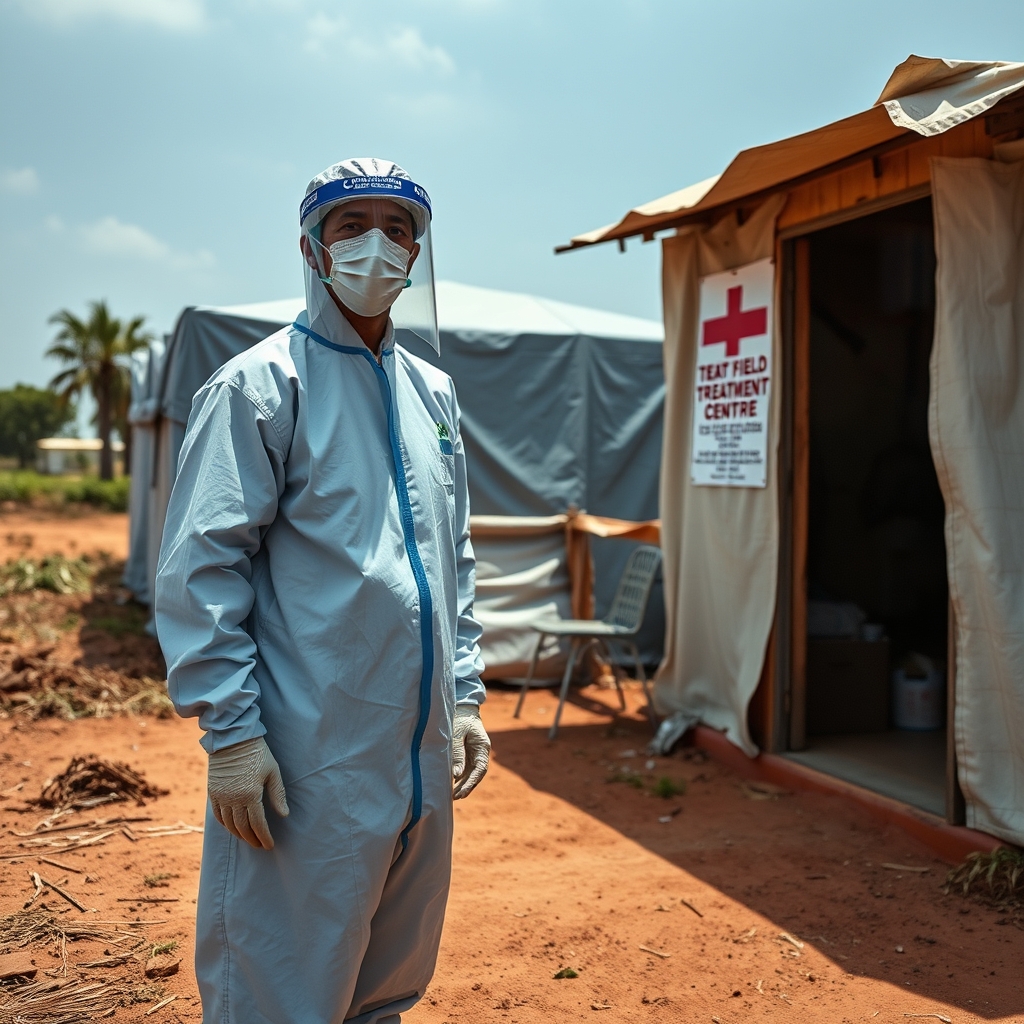
Democratic Republic of Congo Faces Critical Healthcare Staff Shortage Amid Ongoing Ebola Outbreak, WHO Warns
The Democratic Republic of Congo is facing a severe shortage of healthcare professionals needed to staff treatment centers for its rapidly growing Ebola outbreak, according to the World Health Organization (WHO). The crisis is particularly acute in the eastern province of North Kivu, where reported cases surged by 73% over a three-week period. Officials report that the outbreak has now expanded across seven provinces, accumulating a total of 7,773 confirmed cases and 3,759 deaths under government tracking.
Marie Roseline Belizaire, MD, PhD, MPH, the WHO regional emergency director for Africa, noted that while some regions are experiencing temporary declines—such as a 26% drop in Ituri and a 15% drop in Haut-Uele between late August and September—transmission patterns remain highly unpredictable. Because the virus continues to spread across a wide geographic area without adequate containment, health experts emphasize that the overall outbreak remains uncontrolled.
The response effort is heavily constrained by severe environmental and logistical challenges. Local insecurity, widespread displacement, ongoing population movements, and a previous strike by healthcare workers have severely hampered medical access. Anne Ancia, MD, MPH, a WHO representative in Congo, explained the sheer scale of the staffing requirement: a single Ebola treatment facility typically demands approximately 300 medical professionals, spanning general practitioners, nurses, hygienists, and anesthetists.
“We are building Ebola treatment centers but do not always have the human resources needed to operate them,” Dr. Ancia stated, highlighting that frontline personnel must be properly compensated. Previously, healthcare workers in Ituri staged strikes over unpaid wages. Although health ministry officials pledged to clear payroll arrears, administrative verification complications regarding payroll lists left some workers partially paid or receiving nothing at all.
Compounding these operational hurdles, the WHO highlighted alarming vulnerability among young children. According to Dr. Belizaire, children under the age of five suffer the highest case fatality rate, exceeding 60%, compared to roughly 40% among adult patients. Catherine Smallwood, PhD, the WHO’s Ebola incident manager, added that diagnosing the disease in young children is exceptionally challenging because they struggle to articulate their symptoms clearly, and the illness can present with confusing clinical signs.
Key Factors Impacting the Response
- Severe staffing deficits prevent fully operational treatment centers despite new bed capacity.
- Payroll disputes and administrative delays have historically triggered strikes among frontline medical personnel.
- Children under five experience a disproportionately high mortality rate exceeding 60%.
- Insecurity, forced displacement, and high population mobility continue to drive transmission across multiple provinces.
The WHO warns that the current trajectory of the epidemic puts it on pace to rival or exceed the historic 2014-2016 West Africa outbreak, which remains the deadliest on record with over 11,000 fatalities. Public health agencies continue to urge intensified international support and resource allocation to address the human capital gap in affected regions.
Source: MedPage Today