Virtual Reality and Classical Music May Speed Blood Pressure Reduction in Emergencies
When patients arrive at a hospital emergency department with severely elevated blood pressure, standard medical treatments are often paired with feelings of intense fear and distress. According to recent research presented at the European Emergency Medicine Congress, combining immersive virtual reality (VR) landscapes with classical music can help lower patients’ blood pressure and anxiety more rapidly during the first 15 minutes of care.
The randomized controlled trial investigated 130 adult patients who presented at the emergency department with hypertensive urgency. This condition is characterized by markedly high blood pressure readings—typically 180 mmHg or higher on the systolic reading or 110 mmHg or higher on the diastolic reading—without acute signs of organ damage. Researchers noted that while pharmaceutical treatments are standard, the bright lights, noises, and general uncertainty of a busy emergency room frequently induce strong anxiety. This emotional distress triggers stress hormones that constrict blood vessels, pushing blood pressure even higher.
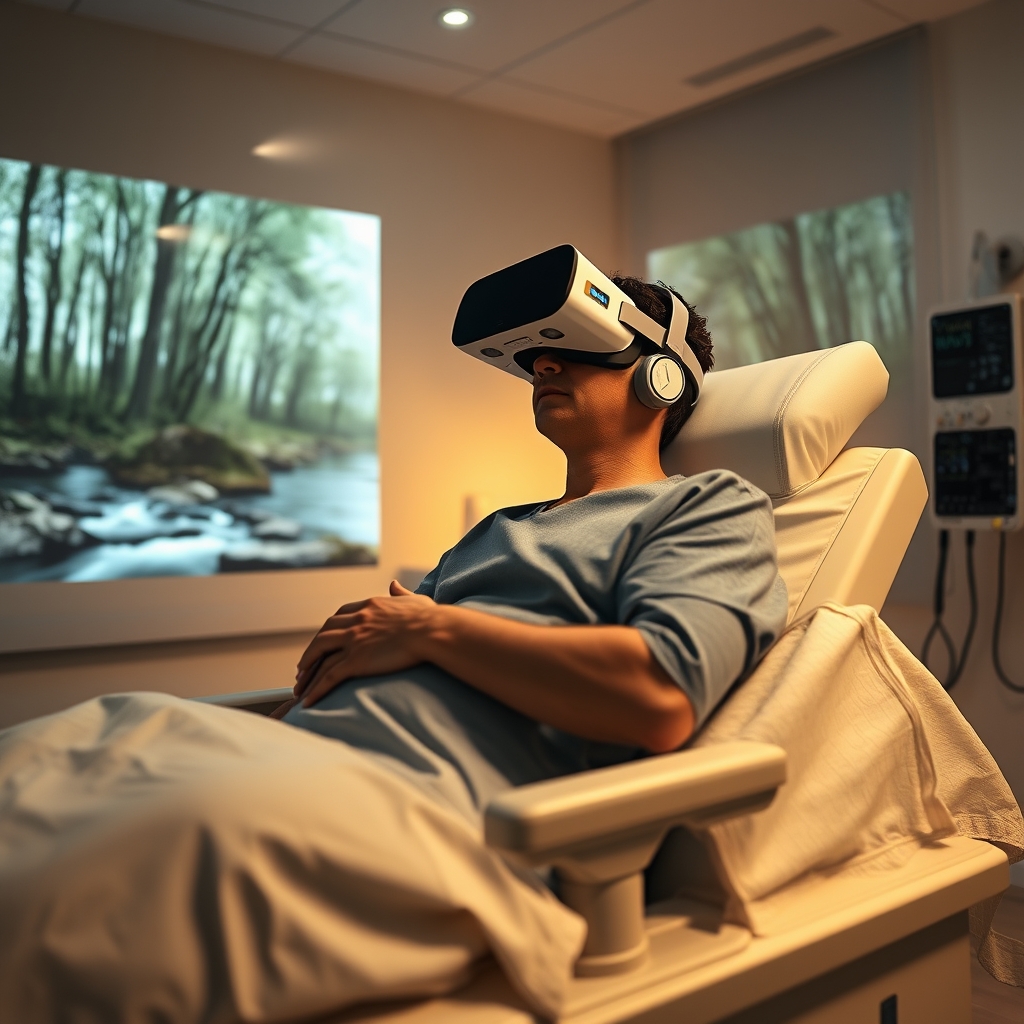
To see if calming patients could accelerate blood pressure stabilization, investigators divided participants into two groups. All patients received standard blood pressure-lowering medication. However, members of the intervention group were also equipped with a VR headset displaying a peaceful, natural setting featuring a flowing river, tall trees, and a wooden suspension bridge. Simultaneously, these participants listened to structured classical compositions by renowned artists such as Bach, Mozart, and Tchaikovsky through a smartphone playlist.
The study tracked mean arterial pressure (MAP), which combines systolic and diastolic measurements to reflect average pressure in the arteries during a heartbeat. While normal MAP ranges from 70 to 100 millimeters of mercury (mmHg), participants in the study started with significantly higher readings averaging between 130 and 138 mmHg. Researchers also evaluated anxiety levels using the State-Anxiety Inventory (STAI), measuring both immediate situational anxiety and general anxious temperament.
Results indicated that patients utilizing the VR headsets and classical music experienced a faster early drop in blood pressure. At the 15-minute mark, the intervention group demonstrated an average blood pressure drop approximately 4 to 5 mmHg greater than the control group, reflecting a statistically significant difference. The VR group achieved a 12% reduction in MAP at 15 minutes compared to an 8% reduction in the control group, and a 15% reduction at 30 minutes compared to 14% for controls. After the initial 30-minute window, blood pressure measurements between the two groups grew comparable as standard care took full effect.
Dr. Safa Dönmez, associate professor of emergency medicine at the University of Health Sciences, Ankara City Health Application and Research Center in Turkey, and the study’s principal investigator, emphasized the clinical value of quick early stabilization. In busy medical environments, safely accelerating initial blood pressure reduction supports both patient well-being and resource management, though he noted that the intervention supports early stabilization rather than long-term management.
Dr. Felix Lorang, head of the emergency department at Klinikum Lippe in Germany and a member of the European Emergency Medicine Committee who was not involved with the study, noted that the findings suggest a safe and feasible supplementary approach. He highlighted that the method was utilized alongside standard medication rather than as a replacement.
While the study demonstrates encouraging early benefits, the authors acknowledged certain limitations. These included the single-center design, a short two-hour follow-up period, baseline blood pressure variations between the groups, and the inability to isolate whether the VR visuals or the classical music drove the primary effects. The researchers plan to conduct larger, multi-center trials with extended follow-up to evaluate VR and music independently and to determine whether personalized music choices offer additional benefits.
Source: News-Medical.net