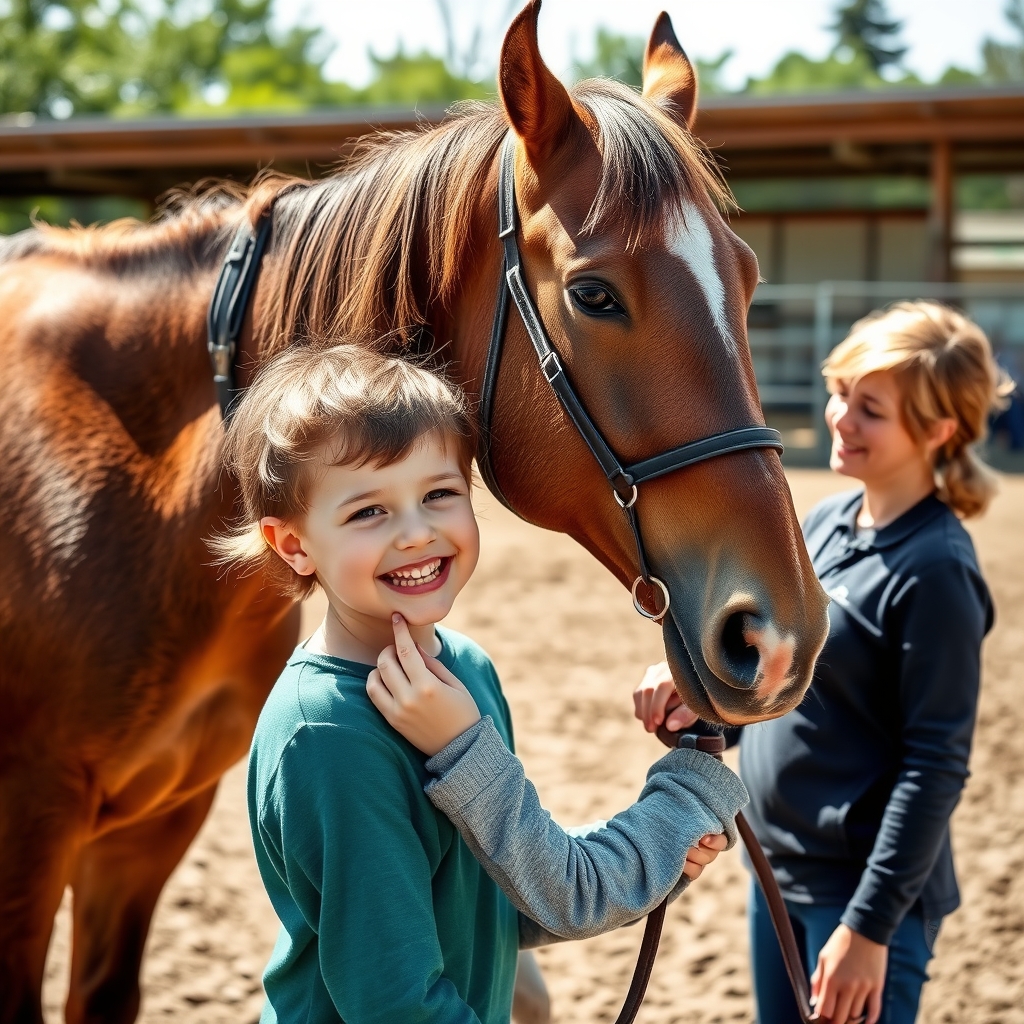
Therapeutic Horseback Riding Shows Promise in Reducing Hyperactivity Among Autistic Youth
Recent scientific investigations conducted by researchers at the University of Colorado Anschutz indicate that therapeutic horseback riding may offer meaningful relief for behavioral and emotional hurdles faced by young people with autism. Published in the journal Pediatrics, the investigation explored whether equine-assisted activities could successfully target symptoms like hyperactivity in children diagnosed with autism spectrum disorder and concurrent psychiatric conditions.
The research team built upon earlier studies that highlighted the positive impacts of eight to ten weeks of structured therapeutic riding. To ensure the reliability of these earlier insights, the scientists designed a randomized trial spanning multiple locations. They partnered with Riding to the Top, a therapeutic riding facility in Maine, to determine if positive behavioral shifts could be mirrored outside of Colorado using different staff, animals, and participants.
Study participants included children diagnosed with both autism and secondary psychiatric disorders. These individuals were sorted randomly into one of three distinct categories: a group participating in active horseback riding, a group engaging in horse-related barn education without direct animal contact using a life-sized model, and a control group placed on a waiting list.
Key Behavioral Improvements Observed
Upon analyzing the results, the investigators discovered that children assigned to the active horseback riding group achieved significantly greater reductions in hyperactivity when compared to participants in both the barn-activity and waiting-list cohorts.
Additionally, both equine-focused interventions—riding and ground-based barn education—yielded noticeable behavioral gains over the waiting list control group. Children in these active tracks demonstrated measurable improvements regarding irritability, emotional regulation, and everyday social functioning.
Robin Gabriels, Psy.D., M.A., a professor of psychiatry, licensed clinical psychologist at CU Anschutz and Children’s Hospital Colorado, and the study’s senior author, emphasized the unique value of the physical riding experience. According to Gabriels, the physical act of riding offers distinct advantages for managing childhood hyperactivity, suggesting that equine therapy could serve as a valuable complement to existing treatment plans or even act as a viable alternative to conventional medication regimens, which frequently carry unwanted side effects.
Alternative Approaches for Children Not Ready to Ride
Recognizing that not all children feel comfortable or prepared to mount a horse, the study also evaluated whether educational barn activities involving a life-sized stuffed horse could produce positive outcomes. Because horses naturally respond to human body language in a non-judgmental manner, ground-based interactions provide a controlled setting for youths to practice essential communication and emotional coping strategies.
Researchers note that while these findings do not imply that equine therapy will benefit every autistic child, they contribute robust evidence supporting structured animal-assisted programs as part of a comprehensive care model. Working alongside horses provides an active, highly social environment that clinical settings often struggle to replicate.
The team at the University of Colorado Anschutz intends to pursue further investigations to better understand the precise mechanisms driving these psychological and behavioral benefits, helping clinicians refine how animal-assisted therapies are integrated into pediatric care.
- Therapeutic riding reduced hyperactivity more effectively than non-contact activities or waiting lists.
- Both riding and ground-based barn activities improved emotional regulation and social functioning.
- Findings suggest alternative options exist for children who are hesitant to mount horses.
Source: Medical Xpress