How Engaging Your Core Muscles Quickly Impacts Blood Flow in the Brain
When you brace your abdominal muscles during a heavy lift, go for a run, or even let out a sharp cough, your body is doing much more than working out your midsection. According to a study recently published in the Proceedings of the National Academy of Sciences, physical actions that engage the core can actively regulate blood flow inside the brain. Conducted by researchers at Pennsylvania State University, the investigation reveals that mechanical forces from the rest of the body have an immediate, dynamic impact on cerebral circulation.
Traditionally, scientists have studied the brain as an isolated organ, looking primarily at local signals within the skull to understand how circulation is managed. However, this new research highlights a previously underappreciated physiological connection. The study demonstrates that ordinary physical movements alter internal pressures, proving that the brain is directly influenced by mechanical shifts happening throughout the body.
To understand how blood moves through the central nervous system, experts typically look at three main types of blood vessels: arteries, capillaries, and veins. Arteries and capillaries carry oxygenated blood to tissues and are surrounded by smooth muscle tissue. Because these muscles can contract or relax to control volume, arteries and large capillaries have long been considered the primary regulators of cerebral blood flow in response to localized metabolic needs.
In contrast, veins contain far fewer muscles and were generally viewed as passive plumbing channels. However, the Penn State team observed something unexpected. Utilizing animal models with physiological structures closely mirroring humans, the researchers discovered that engaging the abdominal muscles causes ultrafast constrictions of major veins within the brain. Specifically, the superior sagittal sinus—the large vein running along the top of the brain—and its bridging veins constricted rapidly within approximately one-tenth of a second following abdominal activation.
Lead researcher Patrick Drew, a professor at Penn State, compared the body’s vascular network to a municipal water system that must dynamically adjust to shifting demands. While arterial adjustments happen on a scale of several seconds, the venous response to core activation occurs almost instantaneously. Qingguang Zhang, an assistant professor of physiology at Michigan State University and the study’s first author, noted that the findings emphasize that what happens to blood as it leaves the brain is just as dynamic as the blood entering it.
These discoveries may open new doors for understanding human health conditions, particularly concerning headaches and migraines. The rapid venous constrictions occur within the dura, the protective membrane surrounding the brain. Although the brain tissue itself lacks pain receptors, the dura contains numerous pain receptors that are believed to play a role in headache syndromes. Researchers hope that mapping these mechanical pathways will eventually help clarify why physical movement can sometimes worsen headache pain and aid in the development of future diagnostic tools and treatments.
Key Takeaways on Core Engagement and Brain Circulation
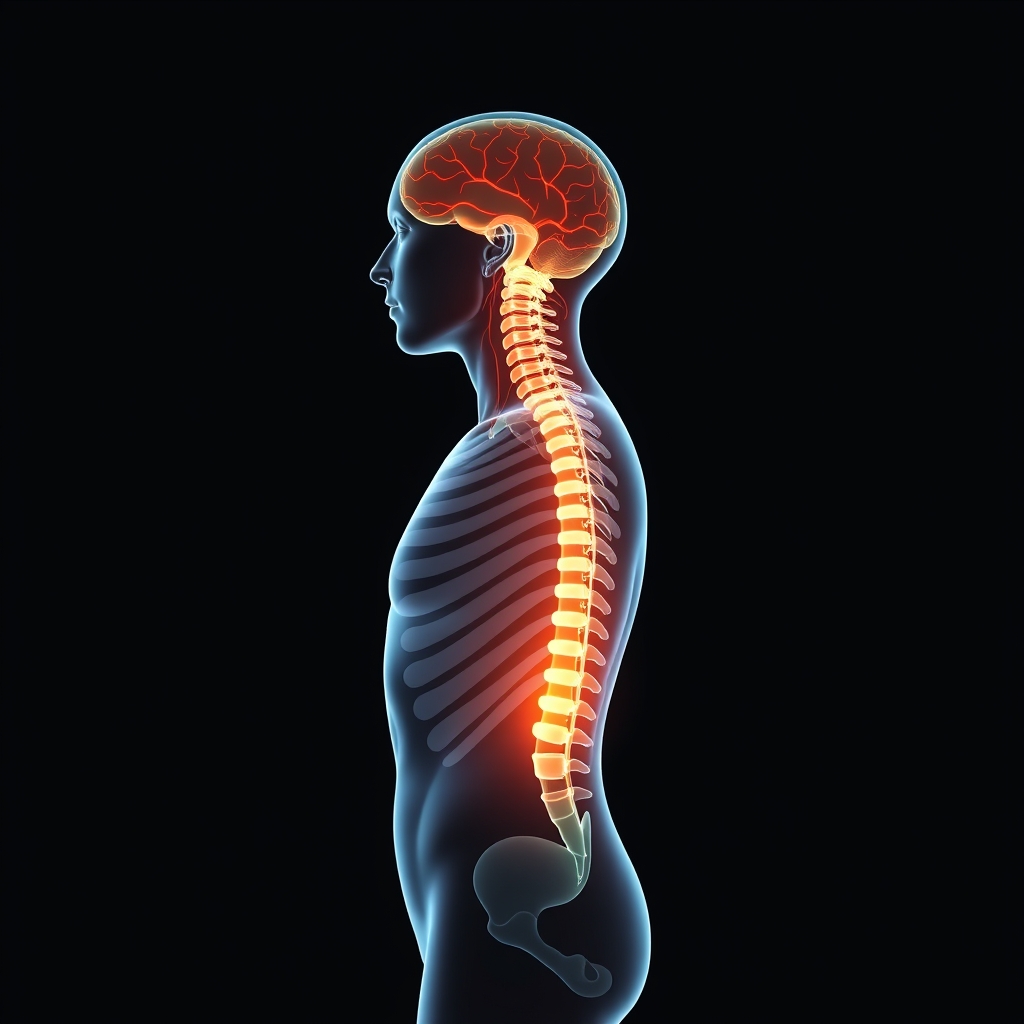
- Core muscle contractions quickly change internal pressures connected to the central nervous system via the spinal column.
- Major veins in the brain undergo ultrafast constrictions within a fraction of a second in response to abdominal movement.
- This mechanical interaction reveals that cerebral circulation is influenced by whole-body movement, potentially offering insights into movement-related headaches.
Source: Medical Xpress