First Clinical Trial of Feijoa Powder Reveals Unexpected Blood Pressure Benefits During Weight Loss
When researchers set out to investigate the health impacts of feijoa, they expected to uncover clues regarding diabetes prevention. Instead, the world’s first long-term clinical trial of the tropical fruit yielded an unexpected finding: a potential improvement in blood pressure. While the supplement did not achieve its primary objectives regarding weight loss or blood sugar control, the incidental discovery has opened a new avenue for cardiovascular health investigations.
The FERDINAND Study Design
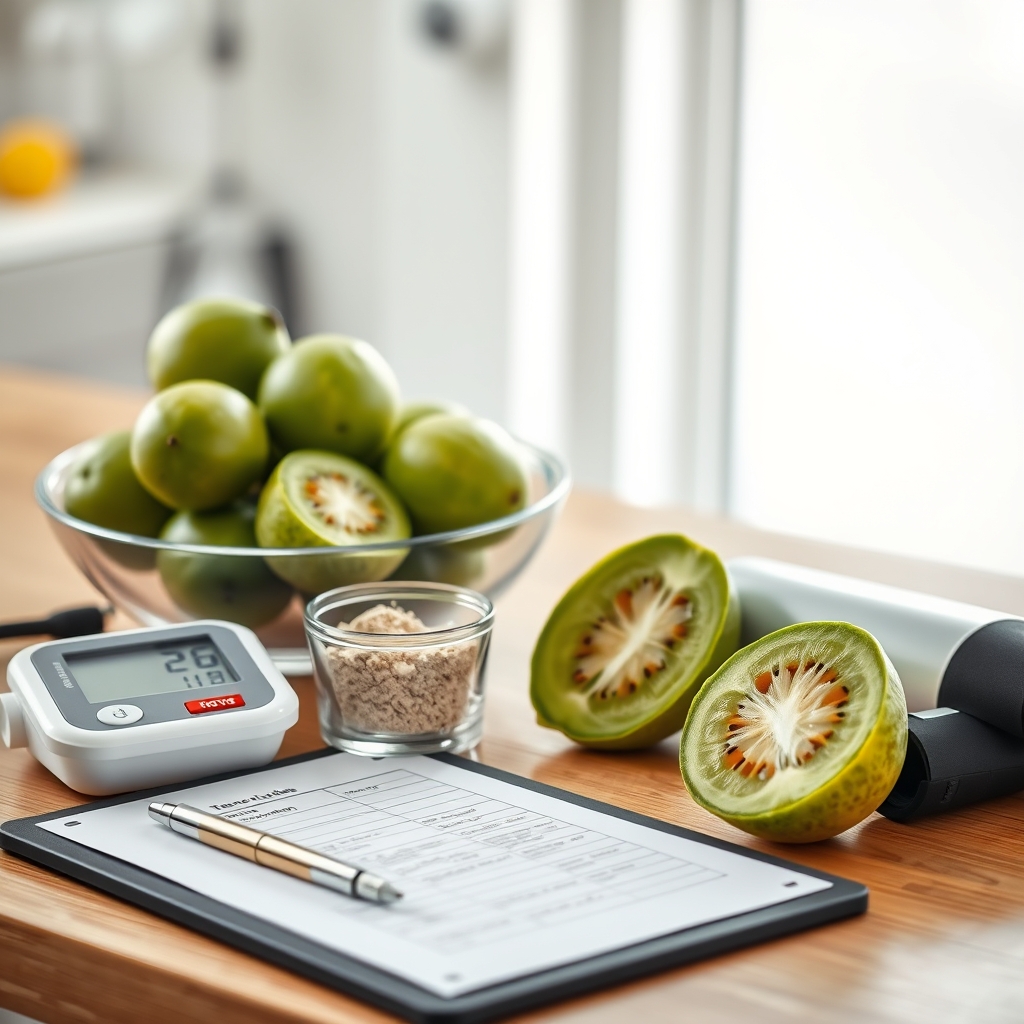
Led by Dr. Ibrahim Mohamed and his colleagues at the University of Auckland’s Human Nutrition Unit, the research evaluated the effects of a whole-fruit feijoa powder product known as Feiolix, which was supplied by Anagenix Ltd. The clinical trial, designated as the FERDINAND study, was structured as part of New Zealand’s High-Value Nutrition National Science Challenge. This government-backed initiative aims to validate health claims for locally exported food products through rigorous scientific evaluation.
The six-month randomized controlled trial included 97 adult participants who had prediabetes. During the first two months, participants engaged in a structured weight-loss program that utilized a free meal replacement system. The subsequent four months focused entirely on maintaining that weight loss. Throughout the entire six-month duration, participants consumed roughly one gram of feijoa powder—or a matching placebo—daily. The supplement was typically mixed into a glass of water or incorporated directly into their breakfast.
Unexpected Cardiovascular Findings
According to the findings published in the journal Diabetes, Obesity and Metabolism, the trial did not reveal meaningful changes in weight loss or blood glucose markers between the group taking the feijoa powder and the placebo group. However, researchers noticed a distinct difference in cardiovascular metrics. Specifically, systolic blood pressure—the top number in a standard blood pressure reading—showed greater improvement among individuals who consumed the feijoa powder compared to those taking the placebo.
Dr. Mohamed noted that this cardiovascular shift was entirely unanticipated. “It’s not what we set out to find, but it’s interesting and certainly warrants more research,” he explained. Scientists have long been intrigued by feijoa due to its rich profile of bioactive compounds. The fruit contains notable levels of polyphenols, flavonoids, vitamin C, and abscisic acid, all of which are recognized for their antioxidant, anti-inflammatory, and potential metabolic properties. A prior, shorter-term clinical study conducted in Iran had previously pointed toward potential health benefits of feijoa for patients diagnosed with type 2 diabetes, lending some biological plausibility to the new findings.
Limitations and Future Research Directions
Despite the promising systolic blood pressure results, the study authors emphasize the need for caution. Because the evidence was not entirely consistent across every secondary analysis and the participant cohort was relatively small at 97 individuals, definitive conclusions cannot yet be drawn.
The research team collaborated with several scientific institutions, including AgResearch, the Malaghan Institute, and Plant and Food Research, to execute the trial. Moving forward, the investigators stress that larger and more extensive clinical trials are necessary. “Further studies in larger cohorts are warranted to fully evaluate the contribution that whole-fruit feijoa powder may make to improved blood pressure,” Dr. Mohamed and his co-authors concluded in their published paper.
Understanding Feijoa and Health
For individuals tracking nutritional science and preventive medicine, the trial highlights the complex nature of studying whole-food supplements. While specific superfoods often generate considerable public interest, rigorous human clinical trials remain essential to separate marketing claims from verifiable physiological effects. As researchers plan subsequent phases of study, the focus will shift toward confirming whether feijoa can serve as an effective dietary adjunct for long-term cardiovascular health and blood pressure management.
Source: Medical Xpress