Remote-Controlled Artificial Urinary Sphincter Shows Early Promise for Post-Prostatectomy Incontinence
A novel, remote-controlled artificial urinary sphincter (AUS) is showing early promise in clinical evaluations for relieving urinary incontinence following prostate cancer surgery. Traditional devices typically require manual manipulation—often involving physical pressure applied to a pump located in the scrotum—to regulate urine flow. According to medical experts, this requirement can be a significant deterrent for patients considering surgical management for post-prostatectomy incontinence.
To overcome this barrier, investigators are studying the investigational UroActive AUS, which utilizes an external remote control to operate the device at the push of a button. Dr. Andrew Peterson, a urologist at Duke University Medical Center in Durham, North Carolina, noted that the technology is designed to eliminate awkward physical manipulation. The device operates via an electromechanical system programmed to adjust pressure automatically based on a patient’s real-time needs and physical activity, shutting off autonomously after a preset duration tailored to the individual.
Clinical Evaluations and Trial Progress
A prospective clinical study, designated as the SOPHIA2 trial and involving 140 patients across 14 sites in the United States and France, recently completed enrollment. The primary endpoint for this trial is achieving at least a 50% reduction in 24-hour sanitary pad weight at six months. Initial findings are anticipated next year.
Earlier data from a first-in-human trial conducted in France demonstrated notable improvements among the six enrolled patients. At the one-year mark, all six individuals achieved at least a 50% reduction in 24-hour pad weight, with all but one experiencing an improvement of at least 75%. Furthermore, daily pad counts dropped from an average of 3.7 to 1.0. Investigators reported no device explantations or revision procedures, and uroflowmetry values remained within acceptable parameters while quality-of-life scores improved across evaluated domains.
Dr. Peterson pointed out that patients may require a small number of follow-up office visits post-implantation to fine-tune device settings, such as adjusting pressures to optimize urinary control. Following these initial adjustments, patients frequently report needing little more than a light liner or no pads at all.
Technological Design and Future Applications
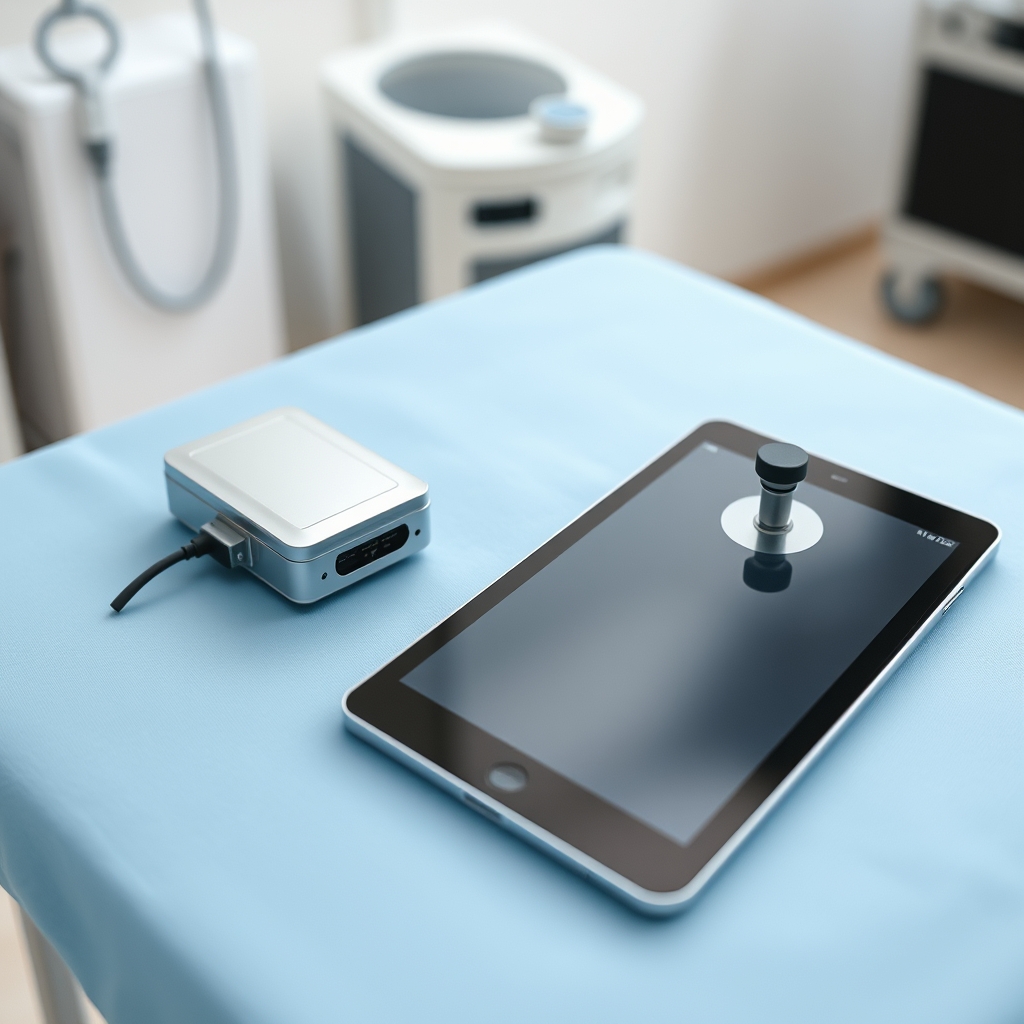
Unlike older-generation AUS options that rely on a limited set of fixed balloons and predetermined water pressure ranges, the UroActive system functions similarly to a small metal implant roughly the size of a cardiac pacemaker. Placed in the abdomen through a straightforward surgical procedure, the unit incorporates an internal battery intended for ten years of continuous use and an electronic chip that receives programming instructions from a tablet computer.
- Designed to eliminate scrotal pump manipulation
- Controlled externally via a wireless remote button
- Adjustable pressure settings tailored to specific physical activities
Researchers suggest that future programming could theoretically accommodate various activity-specific modes, such as higher-pressure settings to withstand physical exertion during sports like tennis or golf. Up to 20% of men experience chronic urinary incontinence following prostate cancer surgery, making stress urinary incontinence a significant concern in this population. While current U.S. studies focus on male patients, French investigators have already initiated evaluations of the device in women experiencing stress urinary incontinence, opening potential pathways for broader future indications.
Source: MedPage Today