Real-Time Brain Imaging and Meditation Offer New Path for Mental Wellness
When physical ailments arise, modern medicine relies on a robust set of tools to repair the body, from casts for broken bones to artificial lenses for clouded eyes. Historically, mental health interventions have similarly focused on reactive treatments, utilizing medications to manage symptoms like low moods or intrusive thoughts after they develop. However, researchers are increasingly exploring preventive strategies that harness the power of the mind to support neurological and psychological health before serious challenges take hold.
At Northeastern University, professor Clemens Bauer Hoss has been investigating how mindfulness practices can be enhanced using advanced brain imaging. Recognizing that mastering meditation independently can be exceptionally challenging, Bauer Hoss and his colleagues turned to neurofeedback—a technique designed to provide individuals with a real-time visual representation of their brain activity to help them learn how to regulate it.
Understanding the Brain’s Networks
To make neurofeedback effective, researchers first analyze an individual’s unique neurological patterns, focusing primarily on two distinct brain systems. The first is the default mode network (DMN), a collection of regions associated with inward, self-generated thought and mental chatter. The second is the executive network, which engages when a person deliberately focuses on their environment, solves problems, or makes decisions.
In conditions such as depression and schizophrenia, the default mode network can become overly dominant and tightly connected, frequently derailing concentration with rumination. Meditation exercises, such as a focused noting practice, aim to reel the wandering mind back toward the present moment. By pairing these mental exercises with real-time feedback, participants can better recognize when their brains shift away from focused attention.
The Mechanics of Real-Time fMRI Neurofeedback
While traditional neurofeedback often relies on electroencephalography (EEG) sensors placed on the scalp to translate electrical signals into audio or visual cues, real-time functional magnetic resonance imaging (fMRI) provides a deeper look. According to Vadim Zotev, a neuroimaging expert at the Mind Research Network, real-time fMRI tracks changes in oxygen-rich blood flow within the brain while a patient lies inside an MRI scanner.
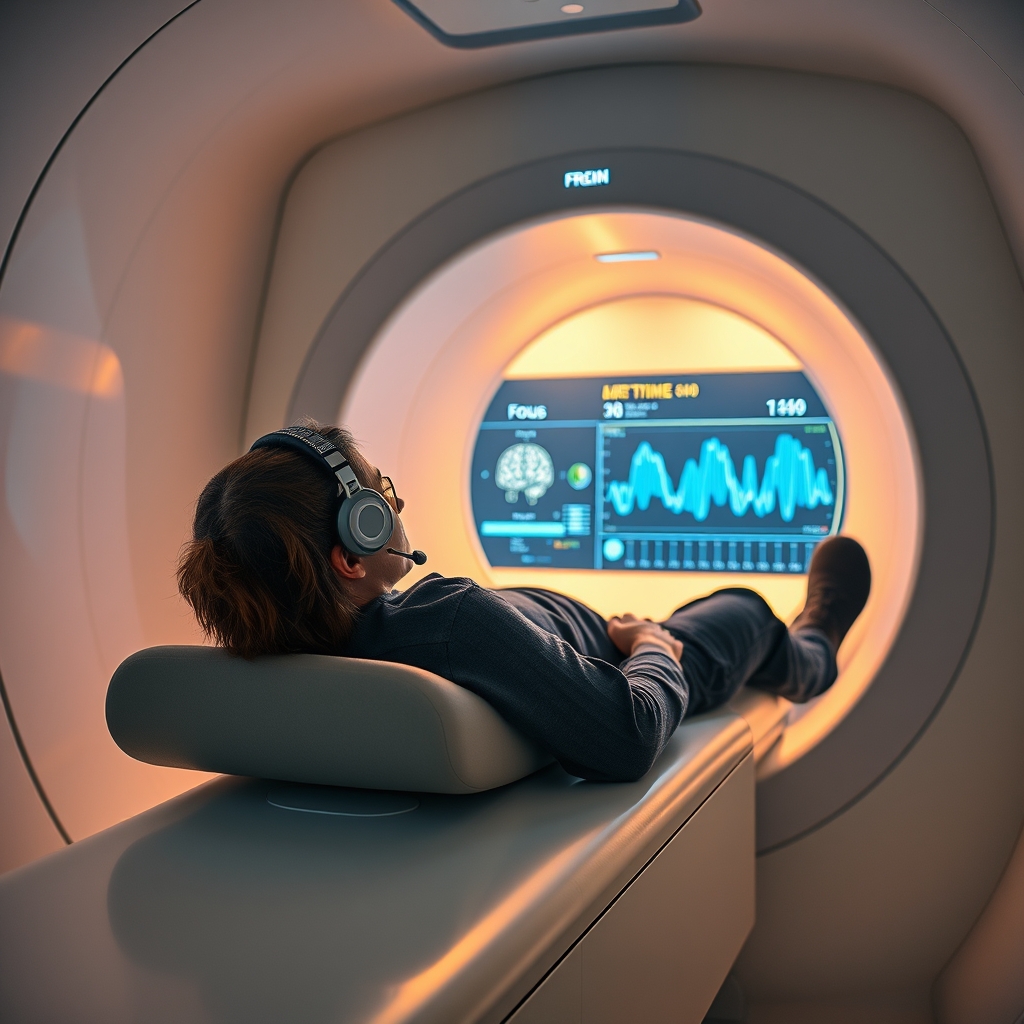
During scanning sessions, participants watch a screen display that reflects their ongoing brain activity. In setups utilized by Northeastern University researchers, visual guides—such as a small ball moving between designated zones—represent whether the executive network or the default mode network is more active. When participants successfully center their attention, the visual indicator shifts toward the focusing zone, encouraging what researchers describe as effortless awareness.
Because these mental exercises require significant concentration, sessions are typically kept short. According to findings highlighted by Bauer Hoss, individuals with schizophrenia and treatment-resistant hallucinations experienced symptom reductions lasting up to two weeks following the intervention. Furthermore, adolescent groups showed decreased brain activity associated with depression, and ongoing evaluations involving bipolar patients continue to yield encouraging results.
Looking Toward Preventive Care
Beyond treating active conditions, researchers are exploring whether neurofeedback-assisted mindfulness could act as a preventative measure—sometimes described by Bauer Hoss as a mental vaccine—for individuals at higher risk of developing psychiatric disorders due to family history. By helping users quickly grasp the cognitive “click” required to achieve meditative states, the method aims to accelerate the learning curve associated with mindfulness.
Despite these promising developments, significant practical hurdles remain. Functional MRI machines are large, costly, and restricted to specialized clinical facilities, and the confined space of the scanner can pose challenges for individuals with claustrophobia. Consequently, researchers are actively investigating more portable alternatives. Ultimately, the goal of neurofeedback is not to keep individuals permanently tethered to a technological monitor, but rather to teach them self-regulation skills they can eventually practice independently.
Source: Medical Xpress