Oxford Researchers Capture Step-by-Step Virus Assembly Using Single-Molecule Imaging
Researchers at the University of Oxford have successfully captured the step-by-step assembly of individual virus-like particles, offering an unprecedented look at how complex biological structures form from simple molecular interactions. Published in the journal Nature, the findings shed light on the physical rules governing viral construction and could eventually pave the way for novel antiviral treatments, engineered vaccines, and advanced therapies.
Solving an Extraordinary Construction Problem
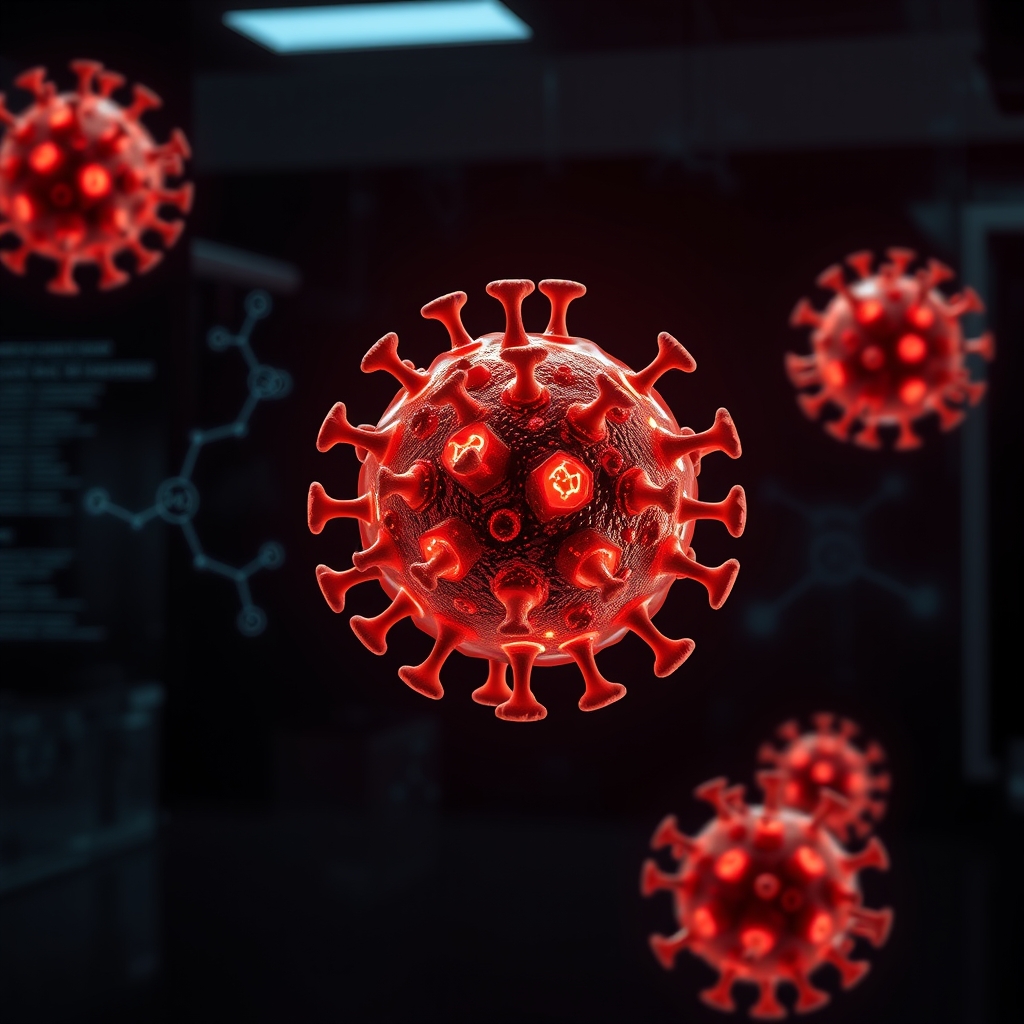
Viruses safeguard their genetic material inside precisely organized protein shells known as capsids. These protective structures often consist of tens, hundreds, or even thousands of individual protein components. Despite the staggering complexity of these designs, their building blocks frequently assemble spontaneously into the correct shape.
For decades, scientists have studied this phenomenon, but observing the exact process directly has remained extremely difficult. Traditional experiments typically show researchers what is present before and after assembly occurs, missing the scarce and short-lived intermediate steps that connect the two stages. To overcome this hurdle, the Oxford team utilized an engineered virus-like particle comprising 60 protein units.
By combining mass photometry—an Oxford-developed technology that measures the mass of individual molecules by tracking scattered light—with a novel method for confining individual molecules for continuous observation, the researchers could effectively weigh a growing particle repeatedly. As new protein components joined, the team recorded the growth process step by step.
Trial, Error, and Molecular Waypoints
The research team discovered that viral self-assembly operates much like navigating a maze where only productive turns lock securely into place. Initially, protein building blocks form weak, reversible connections. This trial-and-error phase allows unsuccessful arrangements to fall apart easily so the components can try again.
However, once proteins form specific closed structures, their multiple connections render them significantly more stable. These configurations serve as critical molecular waypoints, progressively funneling an otherwise overwhelmingly complex process toward a completed particle.
A pivotal moment in this pathway occurs when five larger protein building blocks form a closed pentagonal ring, marking the first major stable structure. Following this milestone, fewer protein components are required to reach subsequent stable stages, causing the overall assembly process to accelerate rapidly.
Implications for Future Treatments
Dr. Roi Asor, co-lead author from the Department of Chemistry and the Kavli Institute for Nanoscience Discovery at the University of Oxford, emphasized the magnitude of the discovery. He noted that viruses solve an extraordinary construction problem without any blueprint or directing machinery, and the new imaging capability allows scientists to watch the physical rules in real-time molecule by molecule.
Co-author Dr. Jack Tan, affiliated with the MRC Weatherall Institute of Molecular Medicine and the CAMS-Oxford Institute, highlighted the practical medical potential of these insights. Understanding these mechanisms at a molecular level could significantly impact future vaccine development and support the creation of antivirals specifically designed to disrupt viral assembly.
Furthermore, the researchers believe these self-assembly principles extend far beyond virology. Because self-assembly is fundamental to biology—underpinning everything from cellular skeletons to complex protein compartments—this single-molecule approach provides a versatile new way to investigate broader biological processes.
- Researchers used mass photometry to continuously observe individual virus-like particles growing in real time.
- Weak, reversible protein connections allow faulty arrangements to dissolve and retry until stable closed structures form.
- The formation of a closed pentagonal ring acts as a crucial waypoint that speeds up subsequent assembly stages.
- Insights into viral construction could aid in designing targeted antiviral medications and innovative vaccines.
Source: News-Medical.net