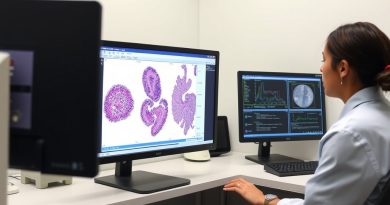
Experts Highlight Potential Labor and De-Skilling Risks of AI in Healthcare
While artificial intelligence continues to expand across clinical settings, experts warn that the technology carries significant workplace risks for healthcare professionals. Speaking at the Association of Health Care Journalists Fall Summit, researchers outlined how digital tools and automation might negatively impact labor conditions, skill retention, and worker autonomy.
Categories of Workplace Technology Use
Mishal Khan, PhD, a senior researcher at the Technology and Work Program of the UC Berkeley Labor Center, categorized workplace technology applications into three primary areas:
- Electronic monitoring: Using digital tools or cameras to track worker activity and fatigue.
- Algorithmic management: Employing software to monitor and coach workers during interactions.
- Task or job automation: Outsourcing specific job components to automated systems.
Khan noted that digital technology has a long history of increasing labor extraction and degrading working environments. Even when jobs are not directly eliminated, employees may still face various operational harms.
Risks to Skills and Patient Relationships
Among the primary concerns identified in Khan’s research is de-skilling, a process where human workers lose specialized proficiencies as automation takes over routine tasks. This loss can threaten a clinician’s scope of practice. Echoing these concerns, Tina Hernandez-Boussard, PhD, a professor of biomedical informatics at Stanford University, highlighted an instance where medical residents deployed to a cardiac ward experienced a power outage that disabled their AI electrocardiogram readers. Without the technology, the residents struggled to synthesize clinical information confidently.
Additional concerns involve worker alienation, detachment from patients, and questions regarding liability. If an error occurs based on an AI recommendation, accountability remains unclear. Furthermore, the introduction of ambient scribes raises questions regarding data collection and whether gathered information might be utilized for employee evaluation.
Legislative Responses and Future Outlook
Experts also pointed to the potential for the gigification of healthcare professions, such as algorithmically managed platforms that prompt nurses to bid for shifts or predict the lowest acceptable wage. In response to these emerging challenges, some state legislatures are taking action. For example, laws in Illinois and Vermont prohibit replacing mental health professionals with AI, while a California proposal seeks to prevent companies from advertising AI chatbots as licensed health professionals.
While technological tools offer certain operational benefits, Khan emphasized that without genuine labor power, the risks of harm often outweigh the advantages.